
Last updated November 16, 2026
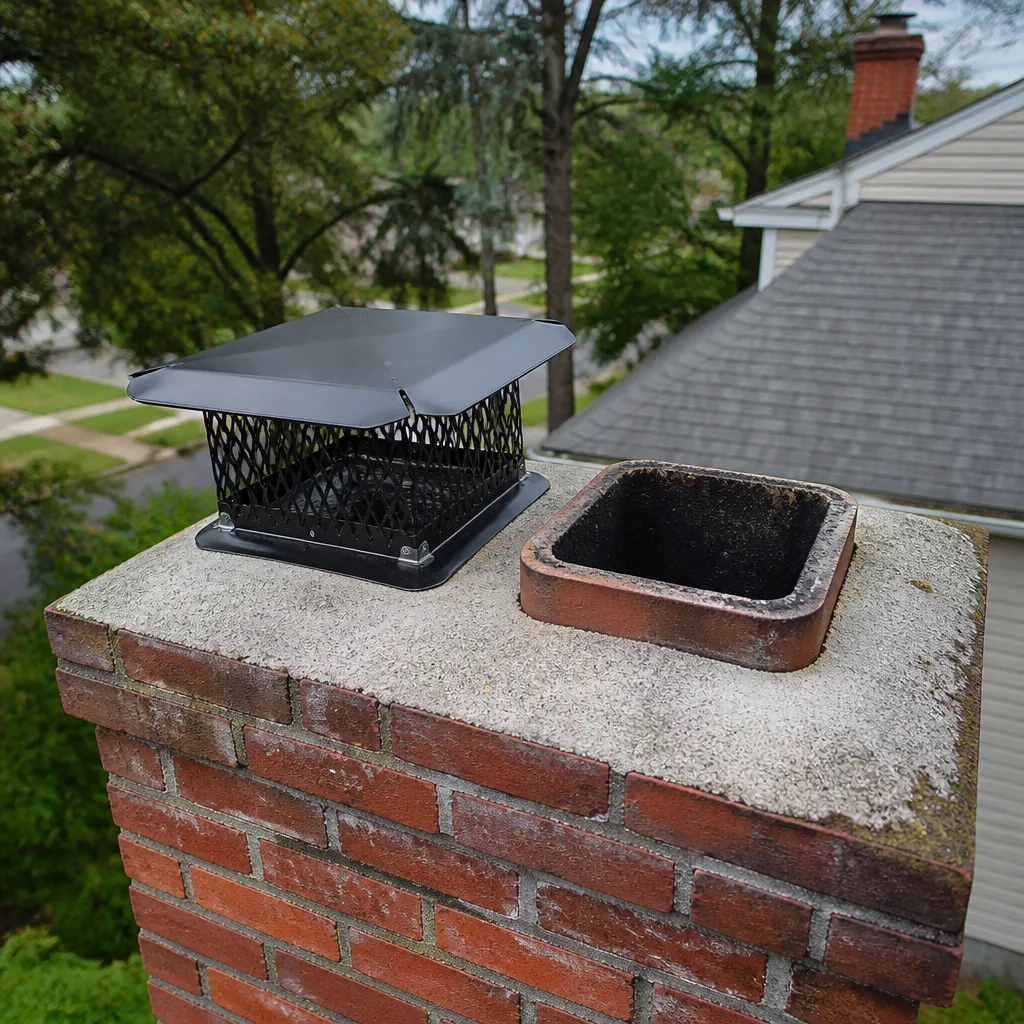 Sweep & inspection
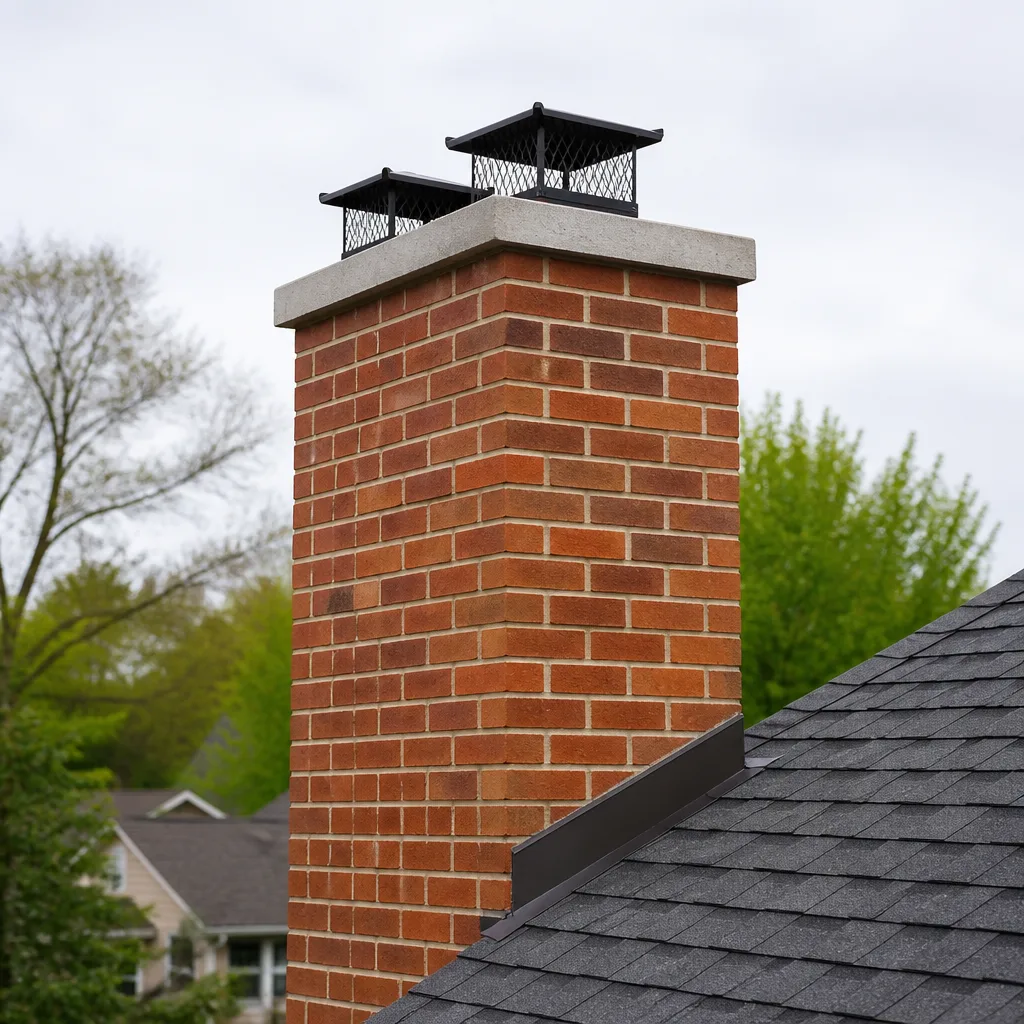 Caps & crowns
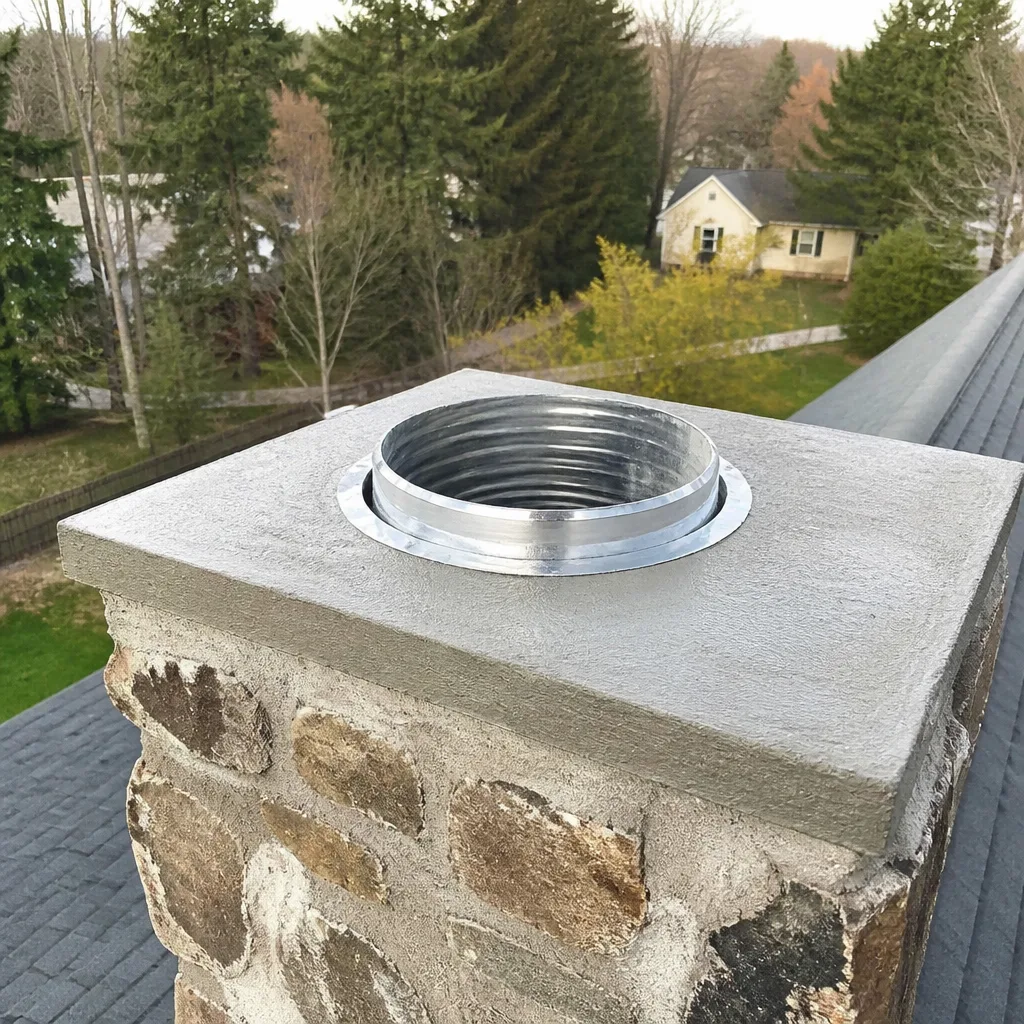 Flue relining
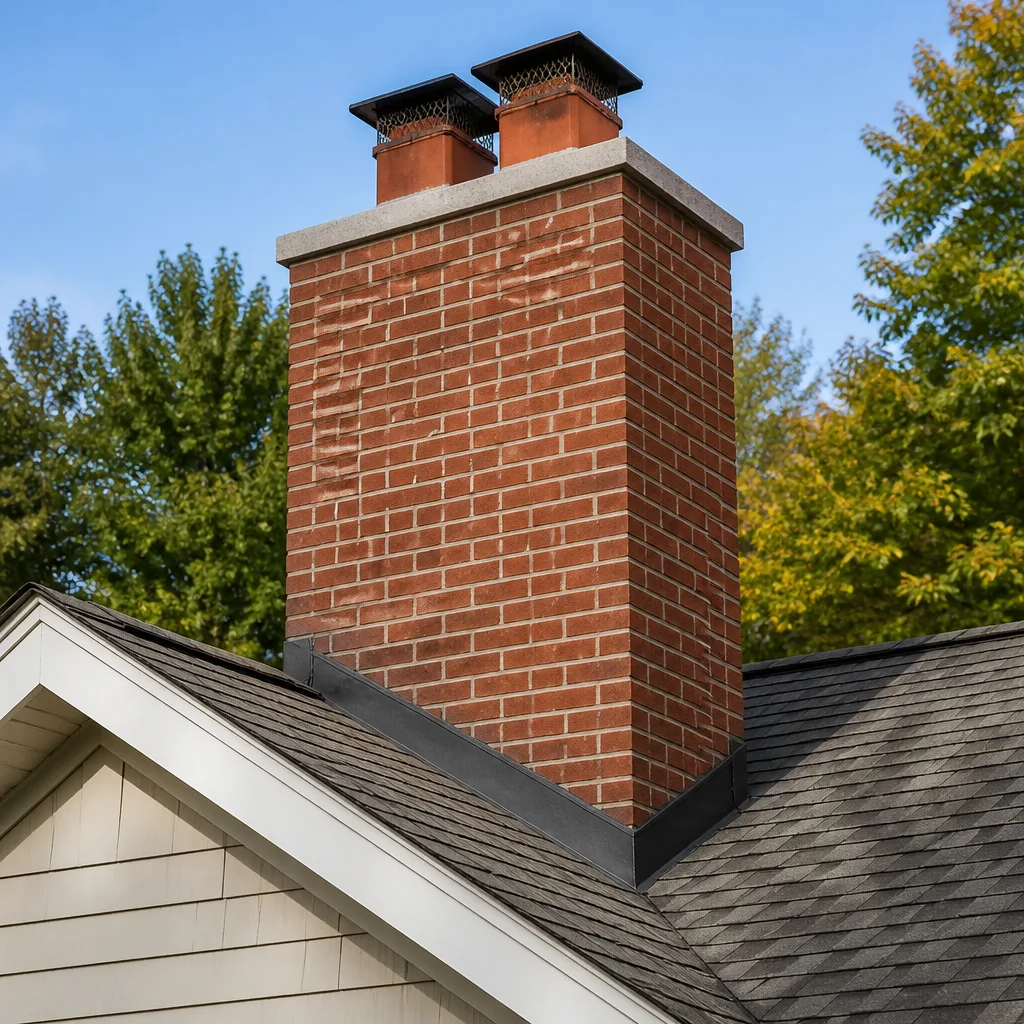 Masonry repair
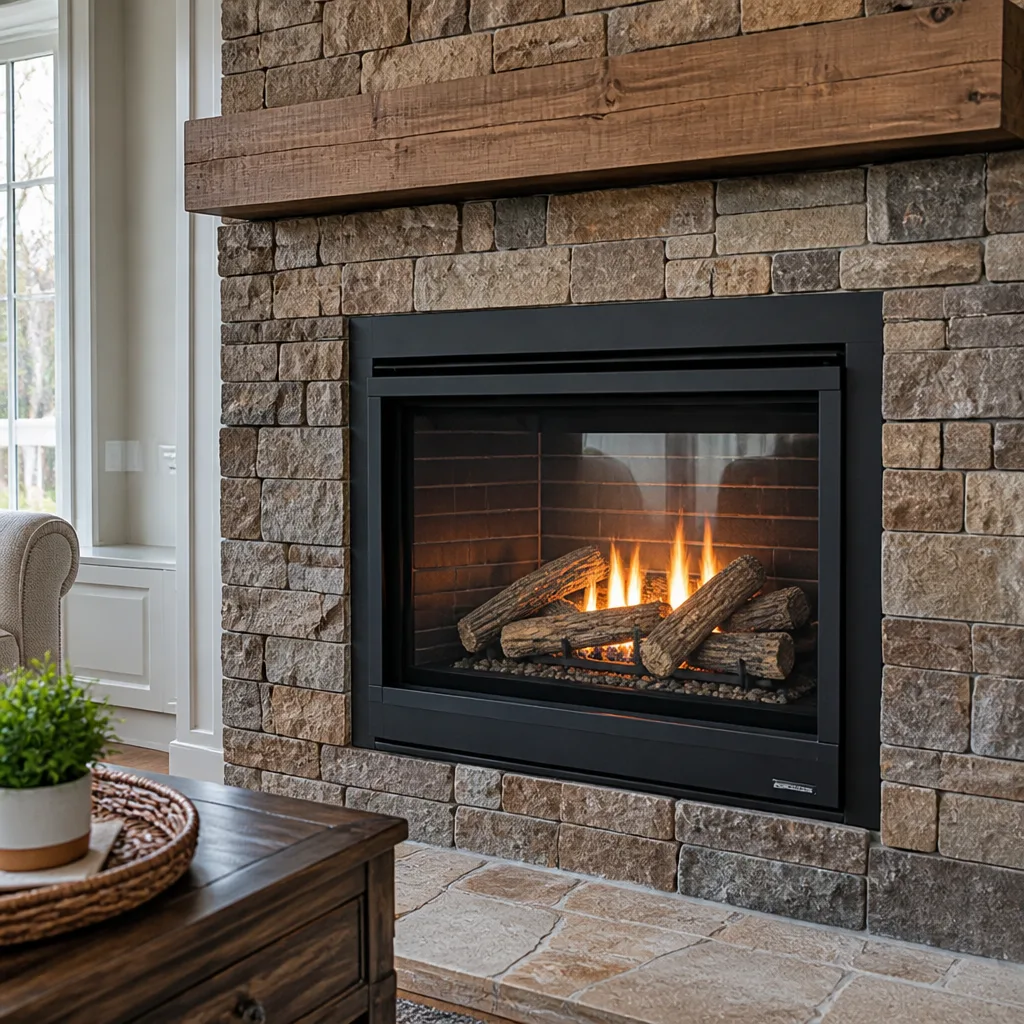 Gas fireplace service
Level 1 sweep and inspection to the NFPA 211 annual standard - flue, crown, cap, and flashing checked and photographed
Chimney sweep logs do not sweep chimneys. They loosen some creosote - which then falls where a brush and vacuum still have to collect it.
The Complete Guide to Chimney Cleaning in Brockton
Most homeowners think a chimney cleaning is a brush, a vacuum, and a receipt. That’s the misconception worth clearing up first. In our experience, a brush alone tells you almost nothing about what’s happening inside the flue. The cleaning is the entry point to a diagnostic process: what the sweep uncovers is what tells you whether your liner, cap, and flashing are doing their jobs or quietly failing. This guide maps every step of that process for Brockton homeowners, from what a Level 1 versus a Level 2 inspection actually means to how to read the report you get afterward, so you know exactly what you’re paying for and why skipping a part of it is how small problems turn into large ones.
Quick Answer
A chimney cleaning in Brockton is a sweep of the flue combined with a visual inspection of the firebox, damper, smoke chamber, cap, and crown, and it typically takes a technician 45 minutes to a couple of hours depending on cresote buildup and access. The sweep removes soot and creosote; the inspection is what identifies whether the liner, cap, or flashing needs repair. The two belong together, and a cleaning without an inspection is only half the job.
Styles & brands we work with
- Sweep & inspection
- Caps & crowns
- Flue relining
- Masonry repair
- Gas fireplace service
Table of Contents
- What a Chimney Cleaning Actually Includes
- Level 1 vs. Level 2 Inspection: Which One Does Your Brockton Home Need?
- The Three Stages of Creosote and Why a Standard Sweep Won’t Touch Stage 3
- The Chimney Problems Common to Brockton’s Freeze-Thaw Cycle
- What a Materials-Accountable Contractor Should Leave Behind
- How to Read a Sweep’s Post-Service Report
- Step by Step: How a Chimney Cleaning Goes From Call to Report
- Common Mistakes to Avoid
What a Chimney Cleaning Actually Includes
A chimney cleaning covers the full path that smoke travels, not just the visible flue. A technician should work from the top down or bottom up and address each component in sequence. If your sweep skips a component, that’s your first signal that the job is being billed as a cleaning when it’s really a brush-and-go.
Here is what a complete sweep covers:
- The firebox. Soot and ash removal, plus a check for cracked firebrick and deteriorated mortar joints.
- The damper. Testing that it opens, closes, and seals. A damper that doesn’t seal lets heated room air escape up the flue all winter.
- The smoke chamber and smoke shelf. The sloped area above the damper where creosote collects and where most chimney sweeps find hidden buildup. It needs scraping, not just brushing.
- The flue itself. Brushed with the correct size brush for your flue’s dimensions. An undersized brush leaves glazed deposits behind on the walls.
- The cap and spark arrestor. Checked for clogs from nests, leaves, and debris, and for rust or loose fasteners.
- The crown and flashing. The mortar crown on top of the chimney and the metal flashing where the chimney meets the roof are the two most common water entry points.
The inspection is the second half. It’s not a separate service you buy, it’s the reason the cleaning has value. What the brush exposes on the flue walls, and what the technician sees at the cap and crown, is what determines whether repair work is recommended. In Brockton, where wood burning is a primary heat source for many homes through the colder months, that inspection is the part that protects you.
Level 1 vs. Level 2 Inspection: Which One Does Your Brockton Home Need?
A Level 1 inspection is a visual check of accessible chimney components with no tools beyond a flashlight and basic hand tools. A Level 2 inspection adds a video camera scan of the flue interior and covers accessible attics, crawl spaces, and basements. Brockton’s older housing stock makes Level 2 the typical starting point for a home that has changed hands, changed appliances, or had any work done on it.
Here’s how the two break down in practice:
- Level 1 is appropriate when the chimney is in continued service, nothing has changed, and there are no known problems. It’s the routine annual check. It covers what’s visible from the firebox, the damper, the accessible flue, and the roof-level cap and crown.
- Level 2 is required before a home sale, after a chimney fire, after a change in fuel type or appliance, after an earthquake or major storm, or when a Level 1 turns up a concern. The camera scan is what reveals cracked flue tiles, gaps in the liner, and offset joints you can’t see from either end.
- Level 3 is a diagnostic inspection that involves opening walls or removing parts of the chimney when a hidden hazard is suspected. It’s rare outside of a known problem, but any contractor recommending it should be able to explain exactly what they’re looking for.
The camera scan is the piece most Brockton homeowners never see on a cheap quote. In older brick construction, the flue tiles were laid in sections, and the joints between those sections are where cracks and gaps develop over time. A flashlight from the firebox shows you two feet up. A camera shows you the other twenty. If you’re buying a house in Brockton or you’ve just had a wood stove installed, ask directly whether the quote includes a Level 2 camera scan, and get it in writing.
The Three Stages of Creosote and Why a Standard Sweep Won’t Touch Stage 3
Creosote is the residue from burning wood. It starts as loose, flaky soot and changes over time as it’s repeatedly reheated. The stages behave very differently, and so does the work required to remove them.
- Stage 1: Soot and flaky creosote. This is what a standard brush removes. It’s powdery, brushes off the flue walls cleanly, and vacuums out without much effort.
- Stage 2: Hard, crusty creosote. This is a hard deposit that clings to the flue wall. A brush knocks some of it loose, but a standard nylon or wire brush won’t get it all. It needs a stiffer brush or scraping.
- Stage 3: Glazed creosote. This is the dangerous stage. It’s dense, hard, shiny, and bonded to the flue wall like varnish. A brush literally cannot touch it. It requires chemical treatment to dissolve it, followed by mechanical scraping, or in some cases a full relining.
This is the part of the process most homeowners don’t hear about. When a sweep finds Stage 3, they often need to come back after a treatment to finish the removal. A contractor could scrape at it with a brush and hand you a receipt. That would leave the Stage 3 layer on the flue, and that layer is the fuel load for a chimney fire. In our experience, we treat glazed creosote as a two-visit job and say so upfront, because that’s the only way it gets removed safely.
Once the glazed creep is dealt with, the flue itself often needs attention. HeatShield resurfacing products restore the structural integrity of the flue walls inside a clay tile chimney, and DuraFlex flexible liner systems reline the flue when a full liner is the correct answer. Where a standard sweep would call it done after the brush, a materials-accountable contractor addresses the flue material itself. That’s the difference between a cleaned chimney and a functional one.
The Chimney Problems Common to Brockton’s Freeze-Thaw Cycle
Brockton’s climate does specific things to chimneys that a homeowner in a milder area doesn’t see. The freeze-thaw cycle, repeated moisture absorption and freezing in masonry, is the single biggest driver of chimney deterioration in this region.
Here’s how that shows up on a typical Brockton chimney:
- Spalling brick. Water enters the brick, freezes, expands, and pops the face off. The brick face flakes away and exposes soft material underneath. This happens on the chimney stack, especially at the top where it’s most exposed.
- Cracked and displaced crown. The mortar crown on top of the chimney shrinks and cracks over time. Once it cracks, water runs down the flue walls, freezes, and works at the joints. A crown repair or rebuild is one of the most common fixes we see.
- Failing flashing. The metal flashing where the chimney meets the roof is sealed with caulk and tar over time. Those sealants dry out, crack, and let water in at the roof junction, one of the most active leak points in a Brockton house.
- Deteriorated mortar joints at the brick stack. Repointing the stack is routine maintenance in this climate, not a sign the chimney is failing. Mortar is the sacrificial layer.
Older brick construction in Brockton also commonly means a clay tile flue with no liner. Clay tiles crack as the house settles and as moisture freezes behind them. Once a tile cracks, the flue has a direct path for heat and carbon monoxide into the surrounding framing. A camera scan catches this. A flashlight from the firebox doesn’t.
The bottom line: the cleaning schedule for a Brockton chimney has to account for the water side of the equation, not just the smoke side. A sweep that doesn’t check the crown, the flashing, and the brick faces is a sweep that’s going to miss the biggest problem in a cold-weather market.
What a Materials-Accountable Contractor Should Leave Behind
A materials-accountable contractor leaves documentation of products installed, not just a receipt for labor. This matters more than a lot of homeowners realize. When a chimney is repaired or relined, the products go inside your house, often permanently, and you should be able to look up exactly what went in.
Here’s what documentation should look like after a job:
- The product name and manufacturer. Not “liner installed,” but the specific product and maker. That’s why we name the brands we use. Look them up. DuraFlex liner systems, HeatShield resurfacing products, and components from Olympia Chimney and Copperfield all have published specifications you can review. Gelco and Famco caps, covers, and venting components can be verified the same way.
- The scope in writing. What was cleaned, what was inspected, what was found, and what was installed. This is your record for insurance and for the next contractor who works on the chimney.
- Photos or camera captures. A Level 2 inspection should produce a camera record of the flue interior. If the recommendation is a reline, you should see the reason on camera.
The contrast is clear. A handyman who brushes the flue and recommends a liner without showing you the camera capture, and without naming a product, may be selling a job you don’t need or installing a material with no verifiable standard. A materials-accountable contractor should name the product, show you what it’s replacing, and leave you with a record you can act on. That’s the standard we hold ourselves to at Chimney Sweep Brockton, and it’s the standard any trustworthy Chimney Sweep Brockton crew should meet.
How to Read a Sweep’s Post-Service Report
The post-service report is how you know what actually happened, and the line items tell you whether the job was thorough. Here’s what to look for, and what a missing line means.
A complete report should include:
- The flue condition by stage. A report that says “cleaned” without noting creosote stage is incomplete. Stage 1, 2 or 3 tells you what was removed and what might need treatment.
- Firebox and damper condition. Cracked brick, mortar joints, and damper operation should be noted, not just passed over.
- Smoke chamber and shelf condition. This is where hidden creosote accumulates. A report that skips it means the tech probably didn’t scrape it.
- Cap, crown, and flashing condition. These are the water entry points. Missing from the report, missing from the job.
- Inspection level performed. Was it Level 1 or Level 2? A report with no camera scan needs a reason.
- Recommendations with evidence. Any repair recommendation should have a photo, camera capture, or specific observed condition attached to it. A recommendation without evidence is a sales pitch.
If a line item is missing, don’t assume it was fine. Ask. The report is the only written record you’ll have, and it’s the record you’ll need for insurance or a future sale. A report that reads as a list of everything’s fine on every chimney, every time, isn’t a report, it’s a template.
Step by Step: How a Chimney Cleaning Goes From Call to Report
Here’s how the process should run from the moment you pick up the phone to the moment you have a written report in hand.
- You call and describe the chimney. Fireplace, wood stove, oil furnace flue, and the approximate age of the house. This is how a contractor estimates time and whether a Level 2 is likely needed before anyone shows up.
- You get an estimate. A free estimate sets the price per job. The written estimate should describe the scope, the products if any are used, and the inspection level included. Estimate in hand before work starts.
- The technician arrives and preps the work area. Drop cloths and a HEPA vacuum at the firebox. If dust is blowing around the living room, stop the job.
- The flue is swept with the right brush for its size. Bottom up or top down. The brush is selected to the flue’s dimension, not pulled from a generic set.
- The smoke chamber and smoke shelf are scraped. This is where a thorough job separates from a quick one.
- The inspection runs. Visual (Level 1) or visual plus camera (Level 2). Findings are photographed.
- Creosote stage and repair findings are documented. If Stage 3 glazed creosote is present, a treatment plan is proposed, not a repeat sweep.
- The report is delivered with the findings and recommendations. Photos, product names if applicable, and a written scope. This is the document you keep.
If any step is skipped, ask why. If the technician is evasive on the report, that’s the signal you’re being handed a labor receipt. For routine service, our chimney sweep service follows this same sequence, and any repair recommended afterward is backed by evidence. Call (877) 704-4074. We answer 24/7. Fast dispatch from 7am to 7pm, Sunday through Friday.
Common Mistakes to Avoid
- Treating a cleaning as a standalone service. A brush without an inspection tells you almost nothing about the flue. If you’re paying for a cleaning, ask what inspection level is included before booking.
- Letting a sweep recommend a liner without showing you camera evidence. Liner replacement is the most common upsell in this trade. A recommendation without a camera capture is unverifiable. Ask to see the scan, and if you can’t, ask why not.
- Burning unseasoned or wet wood to save money. In Brockton’s cold months, burning wet wood drives down flue temperature and accelerates creosote buildup. The cost saved on firewood shows up on the flue walls.
- Skipping the crown and flashing check because the fire burns fine. A smooth-burning fire tells you nothing about water damage at the cap. In freeze-thaw climates, that water damage is how the flue gets destroyed from the outside in.
- Assuming a swept chimney is a safe chimney. A brush removes soot from what’s visible. Glazed Stage 3 creosote lives below the surface, and only a camera or a trained eye at the smoke chamber catches it.
- Going with the lowest quote without seeing the scope. A cheap sweep that skips the smoke chamber, the cap, and the report costs more in the long run than one that includes them. Compare scopes, not prices.
- Waiting for a chimney fire to inspect. The point of an annual inspection is to find the problem before it’s a fire. A chimney fire is not the first warning sign, it’s the last one.
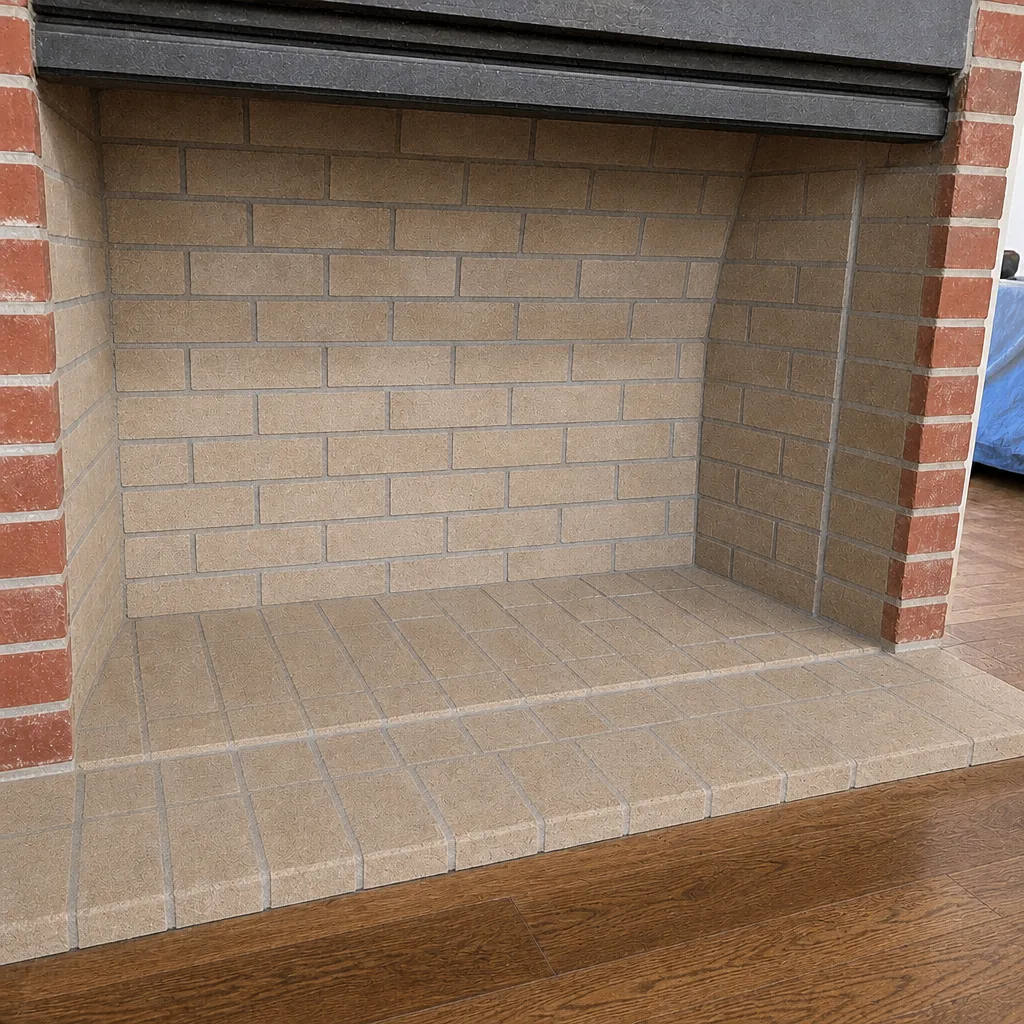
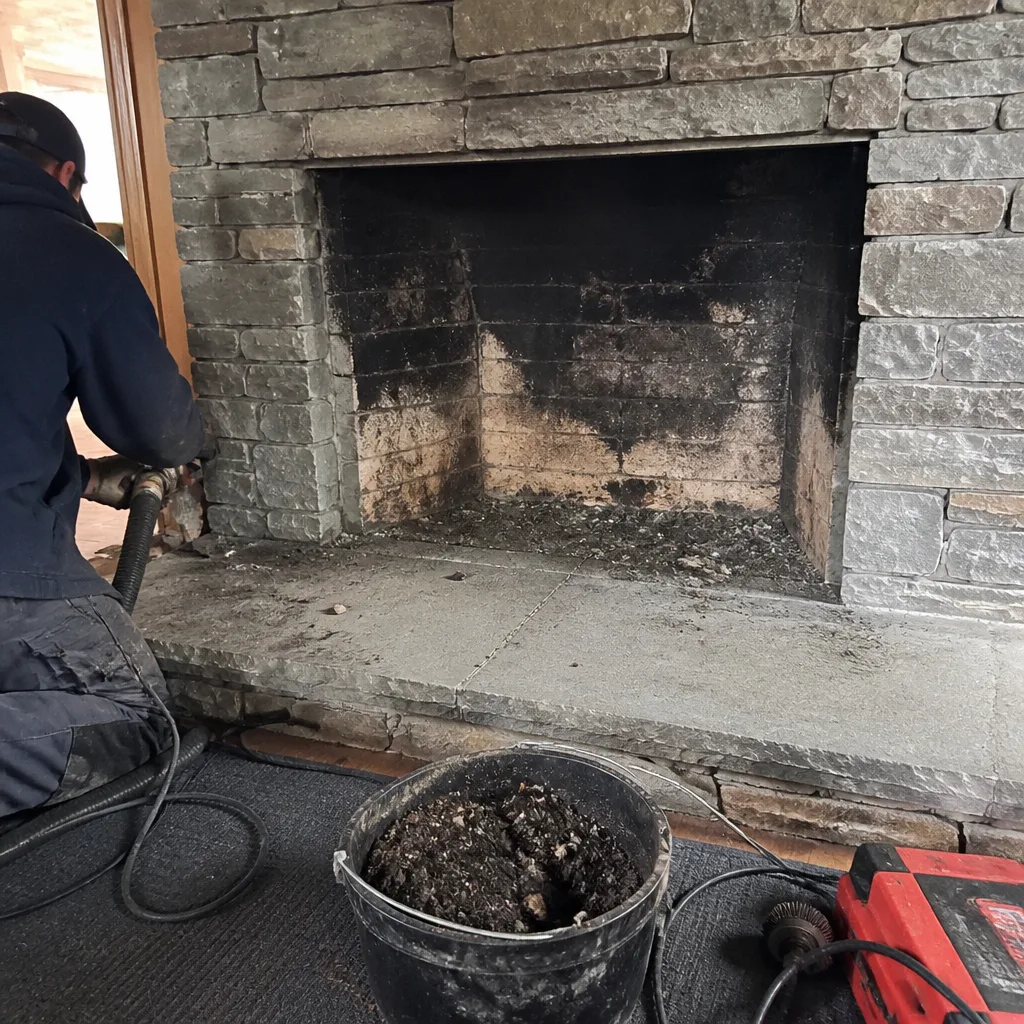
See the difference
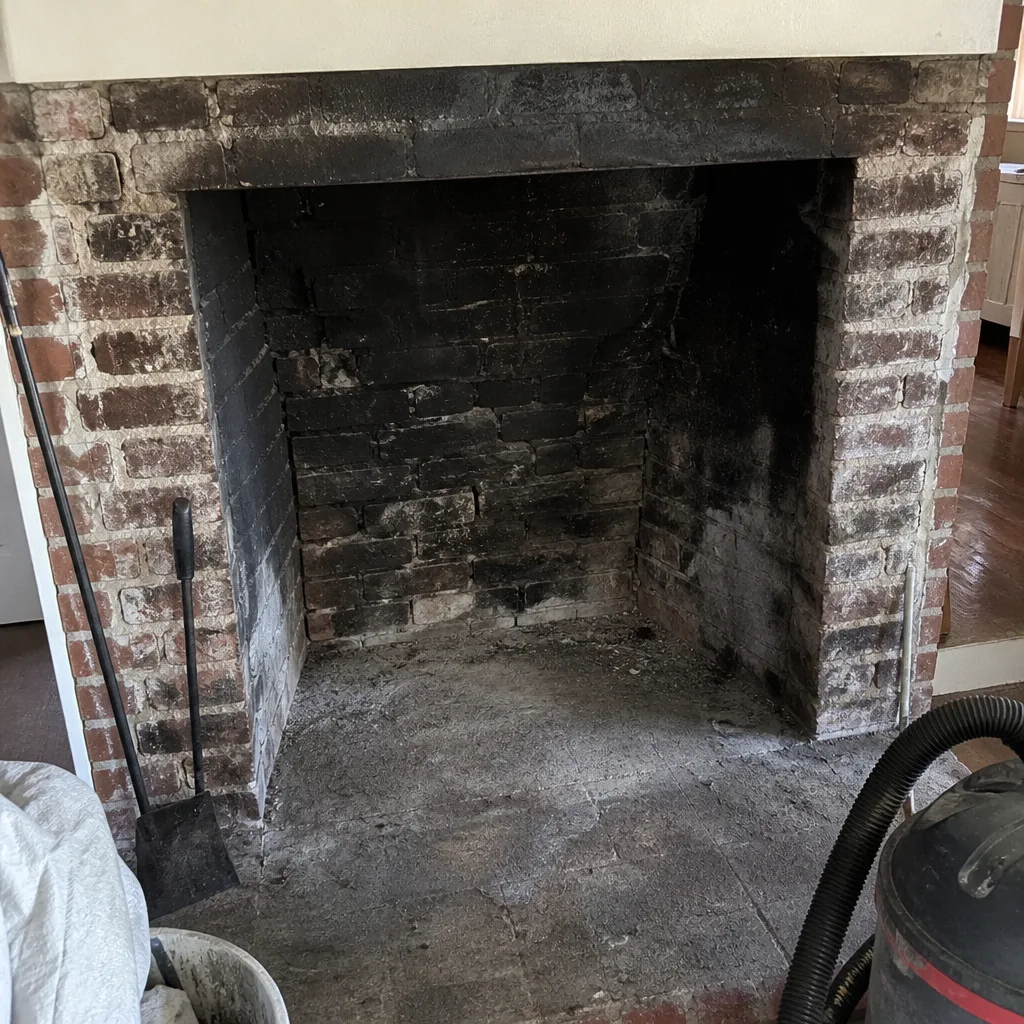 Before
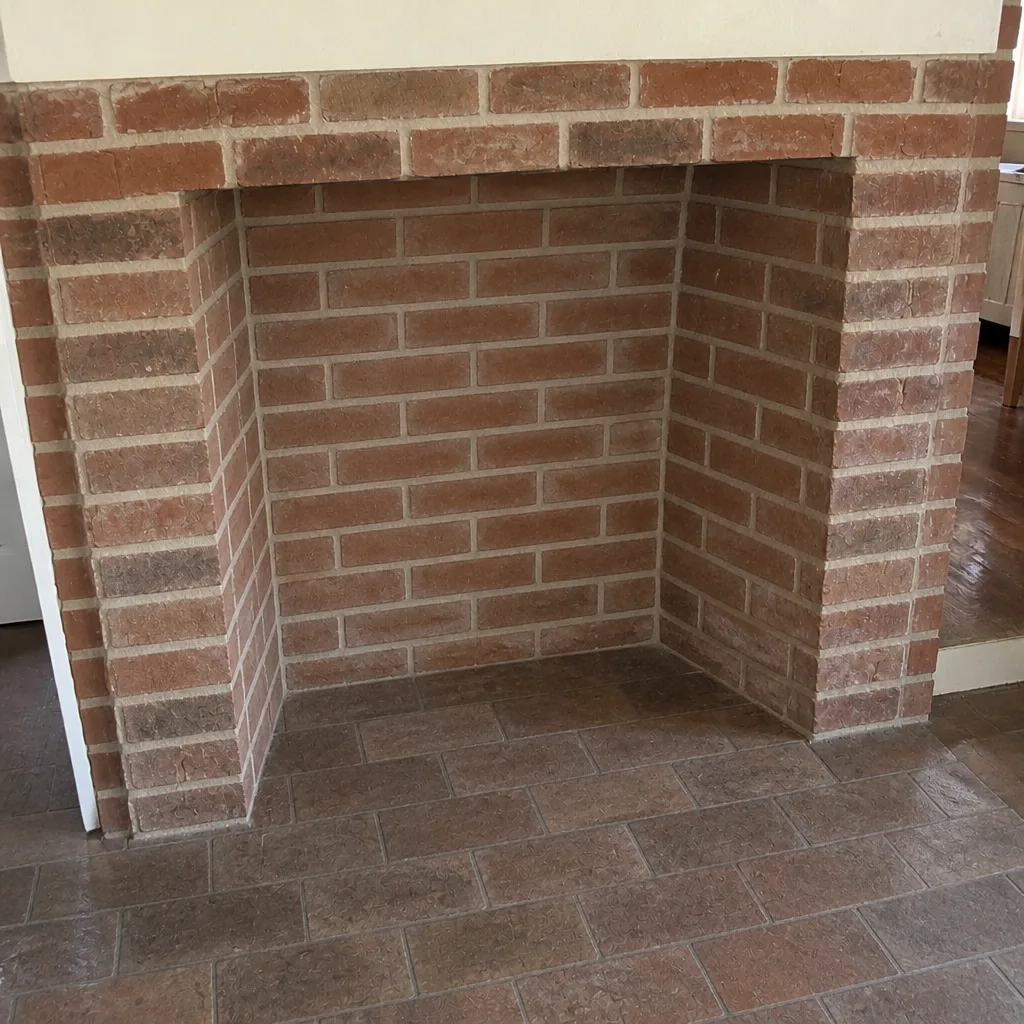 After
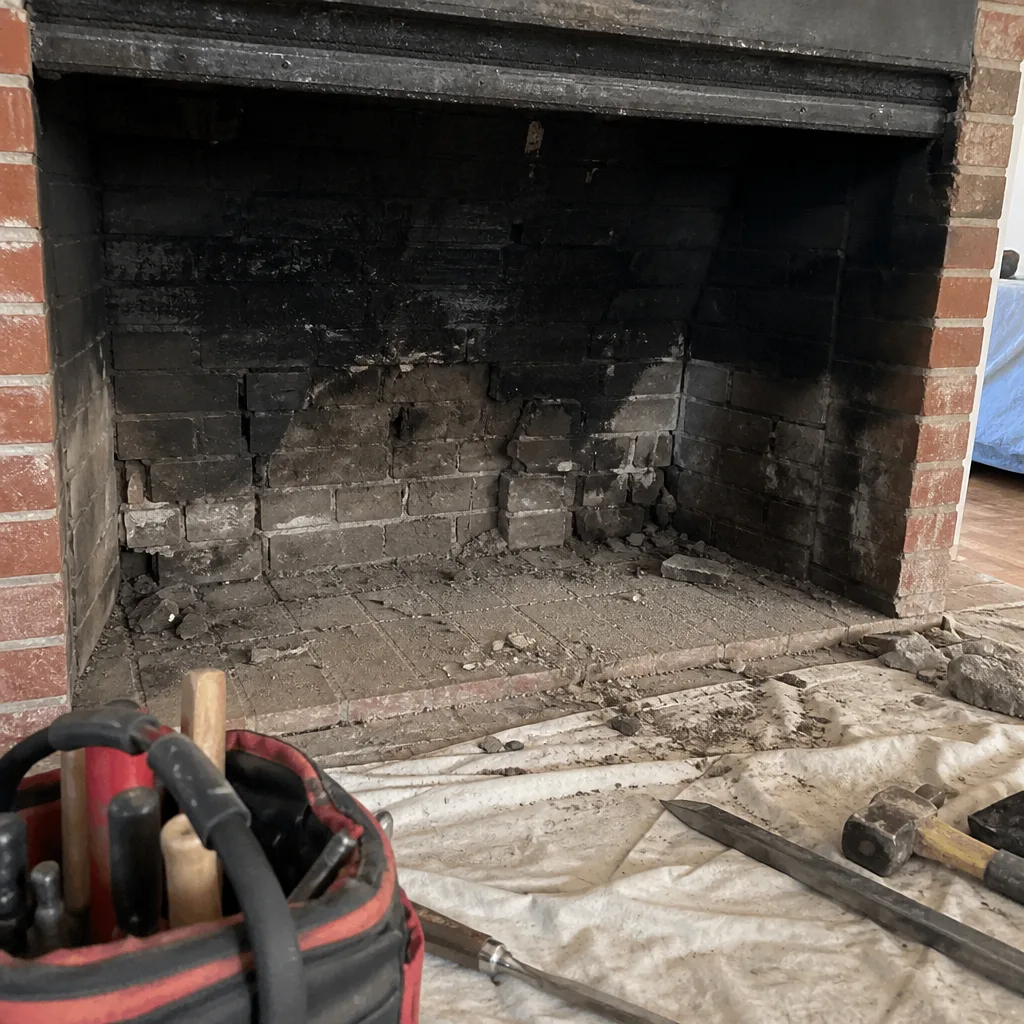 Before
 After
 Before
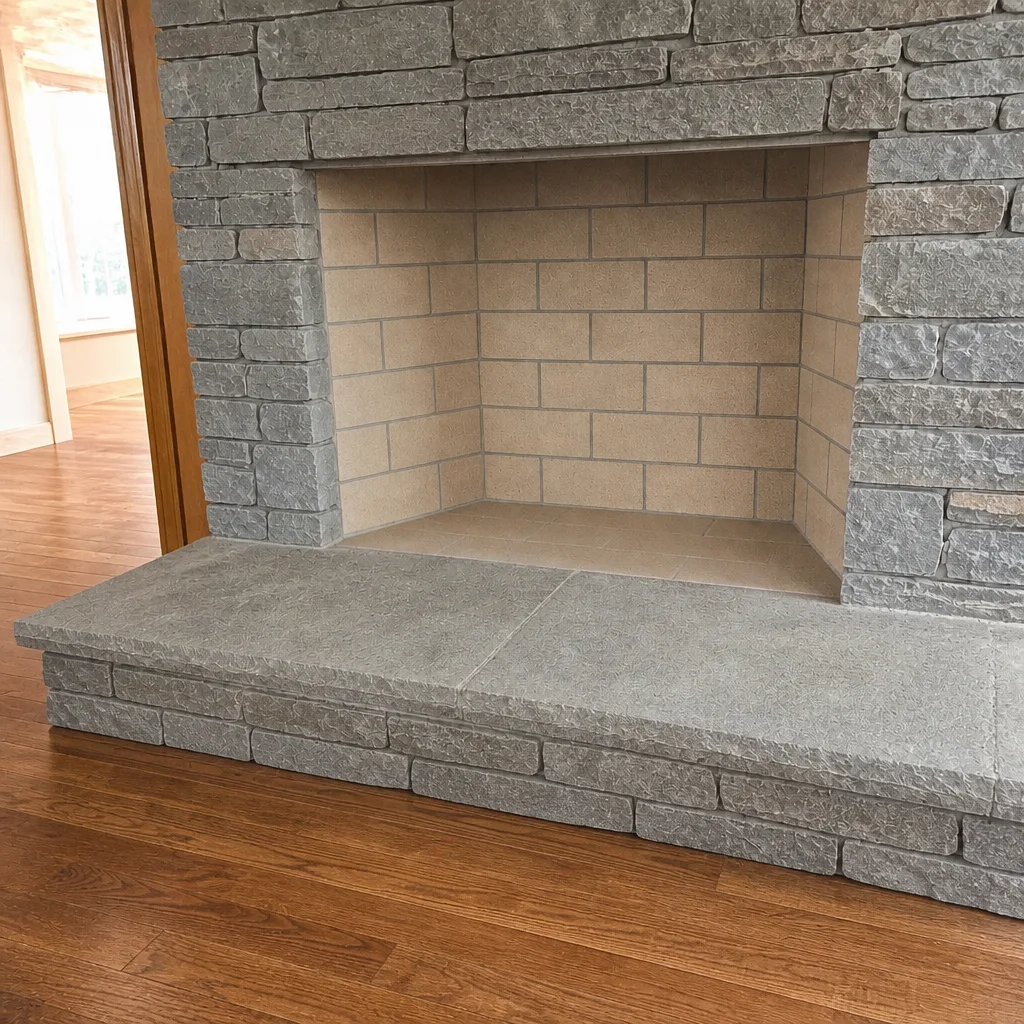 After
When to Call a Professional
Some chimney problems are worth a phone call before the annual sweep. If you smell a strong, acrid odor from the fireplace even when it’s not in use, if your fire struggles to draw or smokes back into the room, if there’s a dark stain on the wall or ceiling near the chimney, or if you’ve had a chimney fire, call a professional before you burn again. Those signs point to structural or flow problems that a brush won’t fix. In a Brockton home, water intrusion at the crown or flashing during the spring thaw is also a reason to call. Chimney Sweep Brockton offers free estimates in Brockton. Call (877) 704-4074. We answer 24/7. Fast dispatch from 7am to 7pm, Sunday through Friday. Any chimney repair recommendation should come with camera evidence you can review, and if something can safely wait until next season, we’ll tell you that too.
Frequently Asked Questions
Once a year for most homes, or more often if you burn frequently or burn wood that isn’t fully seasoned. The annual sweep should be paired with an inspection, and a level 2 camera scan is the standard for any chimney that hasn’t had one. Call (877) 704-4074 to book a sweep and get an exact quote. Estimates are free.
The inspection is what makes the cleaning useful. A brush removes soot from the flue walls you can reach; the inspection identifies cracks, gaps, and glazed creosote that a brush can’t touch. Booking a cleaning without an inspection is booking half the job. Call (877) 704-4074 to ask what inspection level is included in your estimate.
It means the flue has a condition that a cleaning can’t fix: cracked tiles, gaps at the joints, or glazed Damage. Ask to see the camera capture. No liner recommendation should be made without one, and if a contractor can’t show you the evidence, get a second opinion. Call (877) 704-4074 to review your report with us and get an honest take on what’s actually there.
Often the clean comes first, then the liner is scheduled as a follow-up appointment. The reason is glazed creosote removal: if Stage 3 creosote is present, it needs treatment and removal before any liner can go in properly. A crew that quotes both in one visit without addressing the creosote stage is skipping a step. Call (877) 704-4074 to get a scope that’s sequenced correctly.
Yes, and it’s the primary cause of non-fire chimney deterioration in Brockton. Water enters brick and mortar, freezes, expands, and spalls the surface. The crown, flashing, and mortar joints are the entry points a sweep should check every visit. Call (877) 704-4074 and ask for the crown and flashing to be included in the inspection report.
Ask for the camera evidence and the photo documentation, then get a second estimate. Nothing should be recommended without evidence you can see, and if a repair can safely wait, we’ll tell you. Call (877) 704-4074 for a free estimate that includes a written scope and the product names if a repair is involved.
If you’re in one of Brockton’s older neighborhoods and haven’t had the flue scoped since you bought the house, start there. A Brockton chimney, especially in a pre-war house, is where the camera scan earns its keep.
The Bottom Line
A chimney cleaning in Brockton is a diagnostic process, not a product on a price list. The sweep removes what can be removed; the inspection tells you what’s left and whether the liner, cap, or flashing needs attention. Stage 3 glazed creosote needs treatment, not a brush. Freeze-thaw damage at the crown and flashing is the water-side threat most homeowners never hear about. And a materials-accountable contractor leaves documentation of what was installed, named and verifiable, not just a receipt for labor. Get a written scope, get the camera capture, and keep the report.
Chimney Sweep Brockton handles sweep, inspection, and repair together, with products you can look up and evidence you can review before any work is booked. Call (877) 704-4074 for a free estimate. We answer 24/7. Fast dispatch from 7am to 7pm, Sunday through Friday.
Written by the team at Chimney Sweep Brockton.